Recipes from the Range

Part of a ranch wife’s life includes cooking. Since we have rented much of the land our cattle graze, many meals I’ve made have been packed up in our suburban and hauled out to the crew. Sure I’ve done the obvious sandwiches, especially on hot days. Even sandwiches can become creative though when you vary the kind of bread you use–hoagies, buns, etc. Sandwiches can be cold cuts with plenty of toppings or shredded meat sandwiches.
Yet my goal is to not write only of sandwiches, but to add some recipes that my family enjoys. Many of these can be cooked in larger quantities for ranch crews. I love to use the crock pot.

Most of these recipes will be gluten free as well. Six years ago I began cooking gluten free when my son was found to have a wheat interolerance. I’ve felt better since eating this way, so we continue to cook with various grains.

If you have suggestions or would like to add one of your recipe favorites, feel free!

Click here to go to my recipes…


The Future of the Industry

We just got back from the Idaho Cattle Association’s summer gathering. Since we are fairly new to Idaho, it was encouraging to meet new people. My husband has had the opportunity to mingle with other producers, but this was my first time. There is a desire here to promote the industry and share our stories with those not familiar with cattle. I love this because sharing the heart behind the industry is vital. We want consumers to know that we work hard to protect the resources under our care.

Our land practices must provide for our cattle, native wildlife, and future generations with great efficacy. This includes not only maintaining pasture health, but promoting it. Many of our habits today are proactive rather than reactive. Water resources must be protected rather than salvaged. Nutrition programs encourage cattle health, for gestational wellbeing and birth, as well as longterm viability. Our desire is that what is witnessed in our fields will not only sustain our families, but our environment for years to come, while at the same time, providing a food source for the billions of people on our planet.

It goes without saying that ranchers desire to supply the world with sustainable beef. Not just because it is good business, but because it is good practice. Although the “law” of sustainable beef has yet to be written, there is a code that the majority of producers follow: provide the best life possible for the animal as it provides life for us.

Many consumers buy meat, not knowing the practices behind the product. Hopefully this will change. As the word gets out, may the population know that producers are enacting practices such as crop and grazing rotations, fencing off riparian areas, and animal health procedures (just to name a few) that seek to promote the health of land and animals alike.
We are blessed with the opportunity to take part in ranching and look forward to the future!

august 2010 030 The Future Generation

Fill ‘Er Up

stocker calves out to pasture

We leased some pasture recently that we are filling with stocker calves. It’s a stepping stone to reach a bigger goal and another beginning. How many times I’ve started something, never thinking that I’d start it again. Yet it seems in life that there are many starts and stops! On the same token, I’ve started many things with a preconceived notion of what it would look like, only to see life paint a different picture.

While specific situtions are important, perhaps the bigger issue at hand is identity.
There are always going to be things we do simply because they must be done. However, at the core of our being we were created for purpose. I’ve watched people spin their wheels and endure frustrating situations because they do go after their calling. In fact, I’ve done it! I’ve rationalized with myself: If I just do this job, the pay will be worth it… but often I denied my heart permission to thump with excitement. Granted, we have to pay the bills, but I think there are many creative solutions in life that would push us closer to that which makes us feel alive. For us, we purchased stocker calves. It isn’t the large scale ranch we dream of, nor is it as big as the one we had when we changed location, but it is a step towards our bigger goal. Our desire is to steward land and cattle. We are happy to put our toes back in the water while we pencil out ideas for the future.
Land, cattle, and the desire to build for future generations excites our hearts. What excites yours? What makes you feel purposeful?

Homeward Bound


Image

I’ve been shy to blog about all the details of our transition, but we aren’t the only ones to experience this phase in life, so I feel I must unravel a bit of my heartstrings.

Many of you know, that we ran cattle in Montana for years before deciding to transition to a new state. We didn’t change location because we weren’t making money or didn’t like it…quite the contrary. Yet we felt a shift that is hard to describe…an internal feeling that change was coming. We had the option to embrace the change and try something new or continue in our path. When we looked at what we were doing, we enjoyed it, things were going fairly well, but no matter how many angles we looked from, we couldn’t see any way to grow bigger. Looking at our new option, it appeared that several opportunities existed for growth. So we did something that hurt, but seemed like the best option…we sold our place in Montana and all our cows. We uprooted. Why? Because sometimes it is necessary to let go of a smaller dream in order to grab hold of a bigger one.

Today is very different than we imagined when we left… We do not yet own the place of our bigger dreams. In fact, things went so different than anticipated; we doubted everything we’ve ever done! We’ve been through calving season without cows to calve and the ache there is indescribable. We thought for sure by now all the pieces would have come together. The place we had our eyes on had an offer before our place in Montana sold… Sure, we could piece something together, but our big dreams keep us from settling for another small dream.

In the meantime, we keep dreaming. It’s a little like labor…after awhile, you hit a point where the baby hasn’t been born yet, but you are ready to be done. You don’t think anything is really happening but pain. You wonder if you’ll make it…Then something happens and life enters…and it is more beautiful than you imagined. Until then, things are hard and messy, but completely necessary to the unfolding of the process. So during our transition, we are trying to focus on the good things happening and the fact that yes, life will emerge.

There are tough moments; things hard to understand right now. Yet our passion for the cattle industry and our desire to live life on the range doesn’t change. It may not yet look like we imagined, but we pray and trust that good plans will fall into open hands.


What Do I Do With This?

Image

Every rancher we know has a plan–that outlined picture of what the future holds. Some people have it typed and saved on a hard drive, others pencil it out on paper–or scribble it on a napkin– and yet others sketch their plans in their mind map. Whatever the case, we are all aware of what we’d like the future to look like. If we are really honest, we often have two plans–the practical plan and the whoa, I’m dreaming big baby! plan. Usually we file the first and tuck away the second in our underwear drawer so no one will see our outlandish thoughts.

Recently, something happened in our own place that defied both plans and made us stop and think: “What do we do with this?” It isn’t on the plan–not even the wild plan. It feels like it’ll really make things better or spiral us toward the polar opposite. Will it be like the time I lost my rope or saved a calf?

However, we know that the circumstances in our lives are meant to call to the surface something greater. Our reaction to it can either push us closer to the Someone who designed us or push us deeper into our limited perception of what we alone see. It is often hard in the moment to react the way we wish we would have reacted when we look back at it in the future–unless we look back at past occurrences and practice saying what we wish we’d have said then. In other words, we go back and practice saying the thoughts and ideas that will propel us into the future we picture. This is the snipett that I’m learning to do at least: go back and process past errors, covering them with goodness, and being thankful for the piece they’ve set in my life.

For me, trying to do this outside of the arms of God would push me into personal tunnel vision, but I’ve found that Big Hands create Big Things, especially in the area of covering past mistakes. I can’t do it alone. I’ve tried. What a mess!

Yet even the messes can be cleaned up and be made new in God’s hands. Some of my biggest foibles, He turned into beauty.

So the reality sits: We are not sure what to do next. We are learning though, that this is okay. Not part of the plan? Not a problem. Sometimes the best thing we can say is “I don’t know…yet.” Waiting is tough, but it is often better than rushing to our own aid. Do something!, say our pesky thoughts. However, waiting and choosing peace before pushing forward is worth it. Plus, it gives us time to process whether this thing we are unsure of will ultimately be a beautiful piece of our underwear drawer plan…or not. Either way, it’s fine because we can always redream the wild plan. We’ve done it before. 🙂

Dreaming is good because we consider the possibilities and look forward to the future. So how about we all dream big and pull that “whoa, I’m dreaming big baby!” plan back out and let a little Light be shed on it…especially in the midst of unknowns.

Springing with Life

?????????
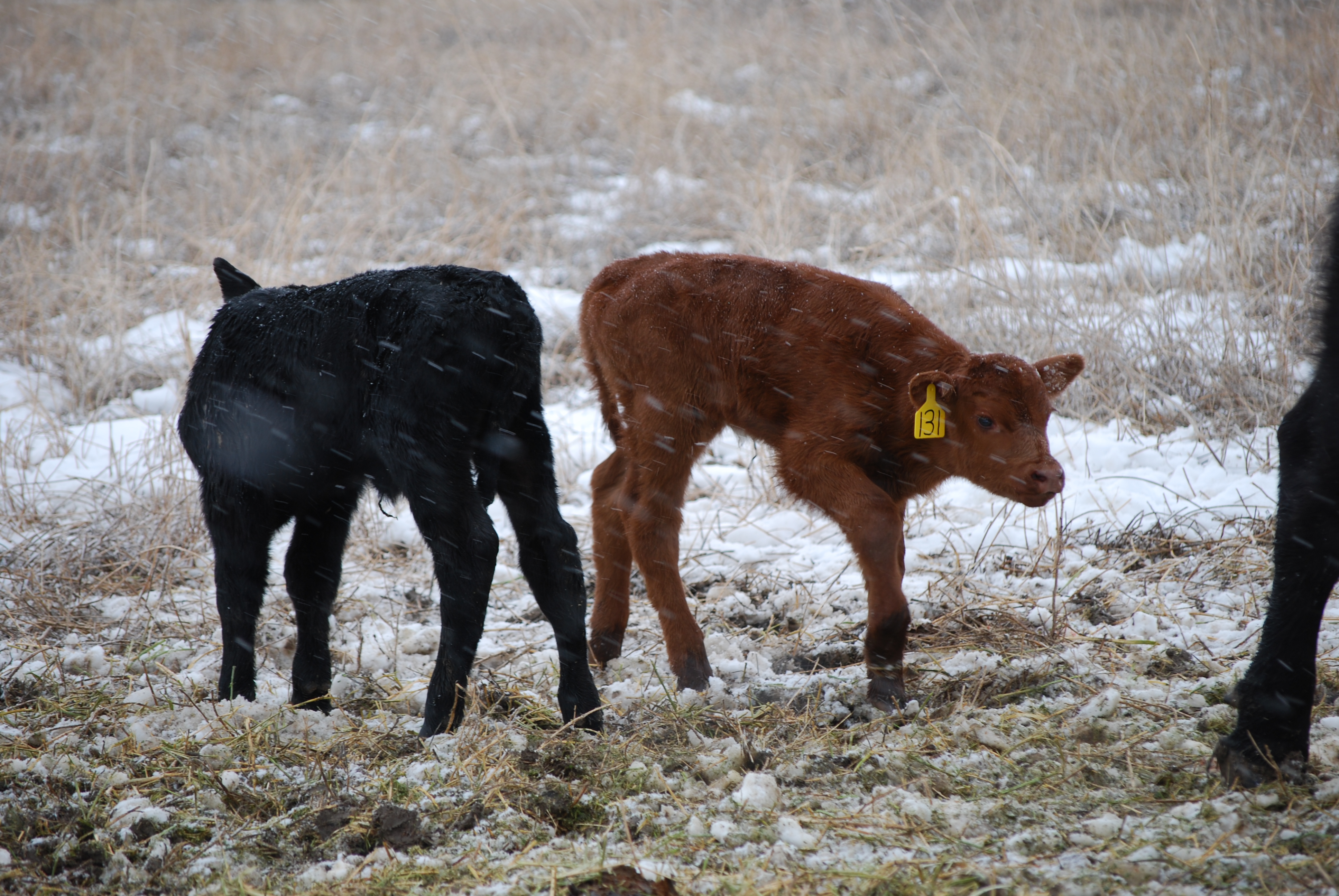
Spring means babies!! I love calving season, although it is often busy. Today I’m reminiscent of past springs. When we first started out, calving season wasn’t too difficult because we didn’t have that many cows. Big or small herd, there is something awe inspiring about the gift of life. I cherish the life that begins in a field–the wabbly legs, the quickness to nurse, the innate ability to stay with momma…
I’ve seen some media slash ranching as barbaric, but those of us who live it know the truth–we treasure new life. We are joyful over every successful birth. We laugh when calves race each other in the pasture, often before they really know how their legs work! Our hearts break when loss occurs. We’ve been blessed to not have much death among our cattle, but every once-in-awhile, something happens that is outside our control.
Life is of value and it is so joyful to watch the young ones teetering around, following mom, and exploring their environment. I’m grateful for spring and the refreshing feeling that comes with it. There is always something new, something being celebrated, out in the fields.

Across the Fence Lines

across the fencelines, option 4, mw
Is it possible that we as ranchers struggle with the issue of the grass being greener on the other side of the fence?

I know I’ve struggled with it. It usually starts so subtly, with “Man, my south pasture would be a lot nicer with tight wire.” Yet before we know it, our eyes stray and we’re thinking… “Geez, my neighbor sure has a nice fence. It must be great to be able to hire it done.” Or maybe it sounds more like this:
Wow, my neighbor must have contracted a better price on his calves than me, look at that new dually.
This ranch would flow so much better if we just had a job in town to support us!
If only we didn’t have to work in town to keep the ranch afloat!
If my family had homesteaded here a hundred years ago, I’d have it that good too.
I’m under the pressure of this family name!

Sure, I’ve done my fair share of gazing over the fence lines too. The problem is, when my eyes are over the fence, my own pasture goes to pot. I miss what I could be seeing in my own place. I forget to consider new possibilities and creative solutions. Occasionally I lose time thinking about how everyone else is managing their place and when I turn around, I’m certain the weeds snuck in a little thicker.

Old habits are hard to break though. So what do we do when all these thoughts come in about how others have it better than us? We must have new thoughts ready to fight back, a counting of our blessings if you will. So when the thought comes, “Wow, it must be nice to have all the family working together and getting along. We’d have built an empire by now if we’d had that.” We have an arsenal handy and we can choose to think instead, “I’m so thankful for the people in my life. Thank you for my spouse who shares my dream.” Perhaps, “His calves sure look better than mine”, can become, “Wow, my calves look better than last year.”

It may be tricky working on these new thinking patterns, but when my perspective changes from jealousy to thankfulness, it seems my heart changes a bit too and darn it if the house doesn’t feel a bit warmer.

Dude!

The dust was flying high that day as a dry spring lead to an interesting gather. The creek the cows were accustomed to had dried up. A new water supply had been temporarily set up until we could move them to their spring pasture. Trying to round them up however proved that the cows were quite content to stay by their new watering hole. After some trying moments, the herd was gathered into a nice bunch and was headed to their new home. That is until a lone rider, overcome by curiosity, strode through the center of the whole bunch and scattered them. Now we try our best to refrain from four letter words around our house, but it slipped: DUDE!
Most ranchers are well aware of the group of people I’m referring to, but for clarification for those in our culture wearing bagging britches that show their undershorts, complete with chains to accent it, I’m not referring to a cliché now used as a pronoun, nor have I lost my car. I am referring to people who have no idea that ranching is work. They come with their cameras and insist we hold the branding iron in just the right position for their picture. They shriek if their new Ariats step in a fresh pie. They don their Kmart cowboy hats with a personal revelation of authenticity. Often they have so much buckle bling they frighten the cows and their spurs jingle louder than the Salvation Army Bell Ringers. They hook their thumbs through their belt loops and begin the swaggering linguistics of a John Wayne movie. After five seconds, they’re convinced their “one of us” and begin spilling stories of their rich agricultural background.
“My grandpa owned two acres while I was growing up. We used to go out to his farm and catch grasshoppers. Them suckers might be small, but their mighty fast. He also had a rabbit or two back in the day and boy we used to let them out in the grass to play with them. Sometimes they were a little quick for us, so we called on Grandpa’s ranch dog to help us out. Yep. That dog would round up those rabbits and we’d help him. Sure can’t wait to get on a horse and herd something again. It’s been a long time. Does this saddle knob face the horse’s butt or head?”
“Oh sure, I know all about ranching. I’ve been to the rodeo at the county fair almost every year. Once I even rode the mechanical bull. If you want, I’d be happy to show you a thing or two.”
Dudes are those people who truly think they know what ranching is all about, when in reality, they know nothing at all. While there is nothing wrong with wanting to learn and admitting there is room for improvement (I am still in this category), it is the profound combination of ignorance and confidence that cause a rancher’s tongue to spit out the four-letter word: DUDE.
Once we had a dude with us during a gather. We just had a small pasture to gather, about 150 acres, and only about sixty cow/calf pairs to move down the road about two miles. Two riders were slowly pushing the pairs from behind, while another rider rode front to close gates along the way. “Dude” was there too, anxious to make the “big ride”. After climbing onto a borrowed horse, he walked the back for a minute before he began trotting the horse. Before long he was zipping from side to side behind the cows, kind of like that annoying little yappy dog from cartoons. Those of us who move cattle regularly know that when you move pairs, the calves don’t necessarily stick with their mommas. They will always pair back up again when you get them to the new pasture, but along the way they may lose sight of momma. Calves looking for momma will occasionally stop, bawl, and then keep walking with the group when momma answers from somewhere in the herd. Well, Dude saw a calf stop and before we knew it, he was zipping through the herd to push the little guy forward. Unfortunately, he didn’t stop his zigzagging and began whooping and hollering. Soon the herd was scattered all over. Dude went after the calf still, chasing it right through the neighbor’s fence. Chaos ensued until Dude was given the important job of “crowd control”. This consisted of Dude riding behind the cowboys and hollering if he saw something stray. By the end of the ride, Dude’s voice was hoarse and he’d probably ridden 50 miles zipping back and forth. During lunch, he recounted the ride:
“That was something else! Those cows were really riled up. The calves were all scared and we had to keep them moving. Then all of a sudden they spooked and the cattle were going everywhere. Luckily I caught one in the neighbor’s pasture. Once we got gathered up again, I rode like the wind trying to keep everything under control. Man, I don’t know what you guys would’ve done if I hadn’t been here. Let me know the next time you move cows.”
This self invitation is usually very selective though, which almost always works out to the cowboy’s advantage. It is here that the rancher can say something like “Actually, we’re rebuilding a fence tomorrow out in Rocky Ground pasture. If you want, bring a shovel and be here by 6 am.” This is when Dude confesses that he is really only good with cattle and he’s busy tomorrow. The cowboy expresses his understanding and from here on out always attaches chores to any cattle work when speaking with Dude. This actually works on most dudes, as they are more concerned with their own showmanship than with getting any work done. At least this is true for bad dudes. Bad dudes always say much and know little, while good dudes may know little, but they listen much.
Perhaps it is like anything else in life, it takes a little while of listening to someone else’s story before you can really understand them. If you don’t choose to take the time to listen though and show up pretending to bow legged, you may just hear a four-letter word slip.

Rural America

across the fencelines, option 1, mwThe road ahead of me appeared desolate.
A lone mailbox tilted on the side of the road, as if greeting passersby. What stretched ahead were miles and miles of hay fields and grazing land. “It leads to nowhere” many had whispered and turned around as if defeated, making the return trek back to town. Yet what weaved in front of me with every twist of the road and each blade of grass was a tapestry of rural America. The pieces mingled together perfectly, but had often been abandoned in trial.

Nothing came easy in the expansion west. The promise of free land allured many, yet quenched the freedom thirst of many more. Homesteads that are around today are frequently a family lineage of trust: trust that the upcoming generation will enhance or at least continue the dream of the founders. The dream of owning a piece of land and working it to raise a crop and usually a family came with a price: most homesteads hold their own cemeteries as a bleak reminder of the cost.

Cost today is measured in money, something of which homesteaders had little. Their sacrifices came in immeasurable amounts of sweat, blood, time, and tears. Their joy was as immeasurable—a good harvest was shared county wide and a wedding meant a shindig into the wee hours of the night. Celebrations were shared not just by family, but by friends and even slight acquaintances. If you could find the place, you were welcome, but you’d probably be asked to pitch in with chores.

As I sulk over my chores today: mountains of laundry, endless phone calls to make, errands to run… I wonder if we’ve lost rural America. Certainly a full tank of gas and wandering spirit would lead me somewhere remote, but it takes a venture much further out of town than it ever did before and once there seems more ghostly than rural.

Yet it was the sacrifice, the risk-taking, of those brave homesteaders that laid the foundation for agriculture today. Certainly it is growing in productivity, even though the number of places is dropping. Agriculture has set a heart-beat that it will continue for generations to come

The First Cows

Billy had worked on ranches in Nebraska, Wyoming, and Montana, picking up on true ranching culture. Believe it or not, the iconic cowboy is not John Wayne. Cowboys have a sincere heart for the land and the cattle, desiring to improve their herd and their pastures. They live authentically. So authentically that sometimes they look funny and smell bad. Thus when our first cows were purchased, the good old boy network weren’t the only ones laughing.
Every Monday morning, the sale barn comes to life. Behind the sale building are the stockyards where cattle await a new home. One can peruse the pens prior to the sale to get a good look at what will be auctioned off. The pens vary from larger loads of cattle needing to be dispersed, to a lone cow or two just being culled from the herd. Many times there are reasons why ranchers are selling these cows: they aren’t good mommas, they’re funny colored, they’re broken-mouthed (really old), they’re ornery, they’re lame, etc. Sometimes it can be as simple as they calve off-season from the ranchers expected calving season.
Billy stepped inside the office on a chilly winter morning. Awaiting his turn to register for a buyer’s card, he looked around him. Children scampered around the indoor arena or sat eating on the bleachers. The aroma of horses and cattle hung in the air. As he stepped up to the desk, several people glanced in his direction. He received his buyer’s card and took a seat.
Having looked over the pens earlier, Billy knew what cows he wanted. He also knew which ones he could afford. He sat waiting as beautiful two and three year old cows went for more than he had in his checkbook. As some older, but still viable cattle came through, Billy’s buyer’s ticket went up. An ugly grey, but younger cow came through…again he bid and won.
By the end of the sale he had an affordable, but scraggly bunch of cows.
A mature rancher came over and asked where he was working and wondered where he was taking the cows.
“I’m an appraiser right now sir, but I’ve been a cowboy and now I’m buying my first cows. They may be a motley crew, but everyone has to start somewhere, right?” Billy introduced himself and the rancher wished him luck and walked away.
Billy laughed at himself, but held his resolve as he made a couple trips with our eighteen-foot horse trailer to haul the cows to our leased pasture.
Surrounded by established farms and ranches, our little herd looked like a joke. But a Black Angus bull’s genes are dominant in comparison to the recessive genes of those old, ugly girls and our first calves were Black Angus babies. Not only that, but because they were older, they had no trouble calving and were great mothers.
We had known what we wanted in trying to build our own herd, but that first calving season, we really fell in love. We fell in love with the amazement of new life, the beauty of a pasture in the springtime, and the thrill of owning our own cattle—as small as the herd was. There is something honest and worthy in caring for animals and the land. Even though we knew it would be hard work, the simplicity of the lifestyle was worth pursuing. We loved having the cows and over time it’s grown…not just in size, but respectability. The cows aren’t as shaggy as the first bunch, but we sure appreciate the beginners.