Quarterly Corral–Cow Collars, Drought, and Change, Oh My!

Hello my friends!

Time goes faster the older you get. My mom used to say this and I remember thinking that was the strangest comment, but now I understand it with full clarity. Life gets fuller the older you get and that’s a good thing, but boy does the time fly!

WHAT IS THE QUARTERLY CORRAL?

I’m going to aim this year for quarterly updates, thus the name Quarterly Corral. In between, I’ll be writing in the faith sphere on Substack, so feel free to find me there. I’d love to connect with you. I also have a website for my kidlit work that you’re welcome to check out if that appeals to you.

As for the ranch, life has been interesting the past few months!

COLLARS

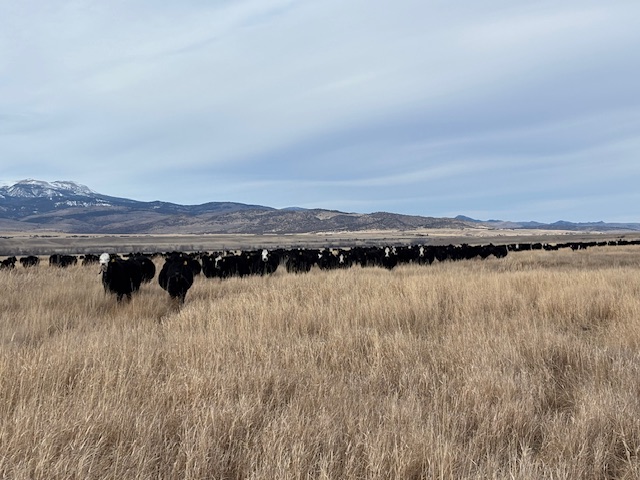
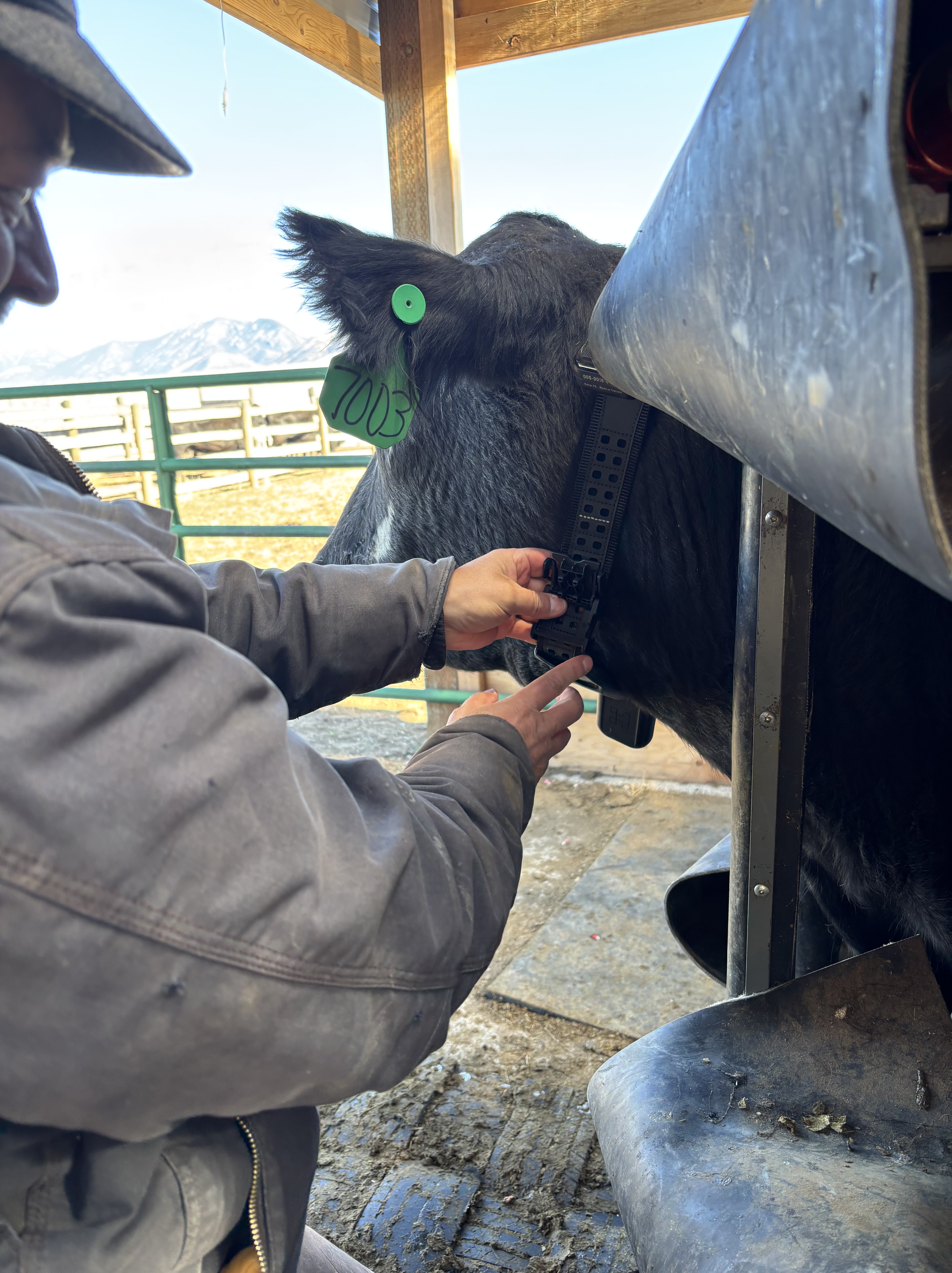
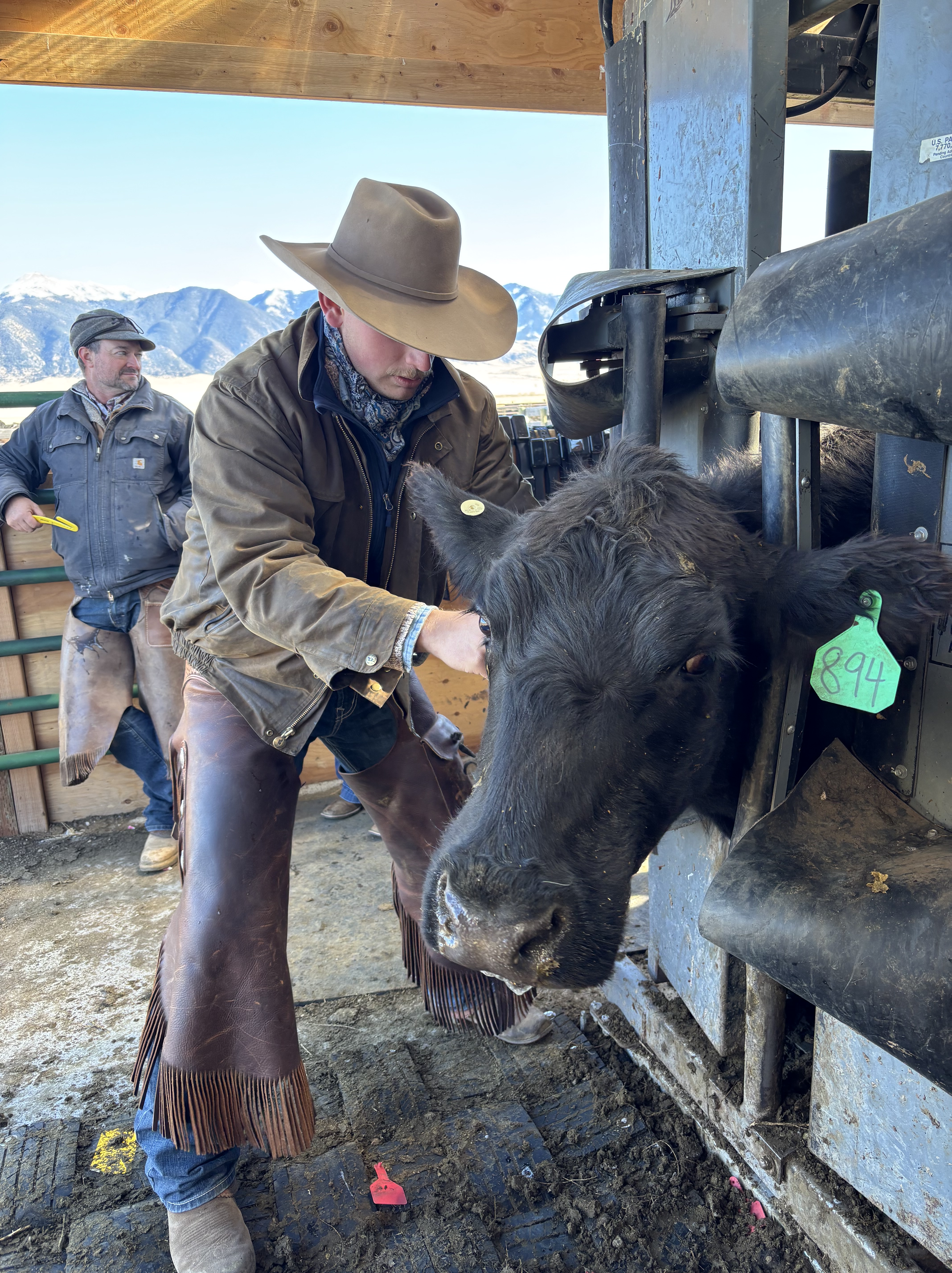
We implemented virtual fencing this fall with our cattle herds. A group of Montana State students came out to work with us and learn as well. We love working with students.

We chose to use Halter for our collars, and they’ve been great. There are three towers on the ranch to work between collars and cell phones. We can now create virtual fencing with an app on a phone. It didn’t take the cows long to respect the collars. The collars buzz or pulse when cows get close to a boundary, and they don’t cross that boundary. It takes about 12 minutes to implement new pasture fences.

This doesn’t mean that the phone does everything. The cattle need to be checked. They still are guided when moving big distances. Boundary lines can be adjusted and they’ll often gravitate to new pastures if it’s close by, but cattle moves still happen. However, the collars can be used during moves–you can set them so the cattle move down an invisible lane.

The cows don’t seem to mind their new necklaces. Many tossed their heads for about 10 seconds after coming out of the chute with their new collar, but that was it. We did put collars on the heifers, which we check regularly as they continue to grow. We don’t want them to get tight. A few have lost their collars, but not many.

It’s been a learning curve with software–mostly for my hubby since it’s on his phone–but it’s been an interesting process to see the cattle adapt. It’s also been great to graze pastures along the river bottom where fencing is difficult, but grass is plentiful. The river usually gorges each winter and takes out fences, but this winter has been too warm.

DROUGHT

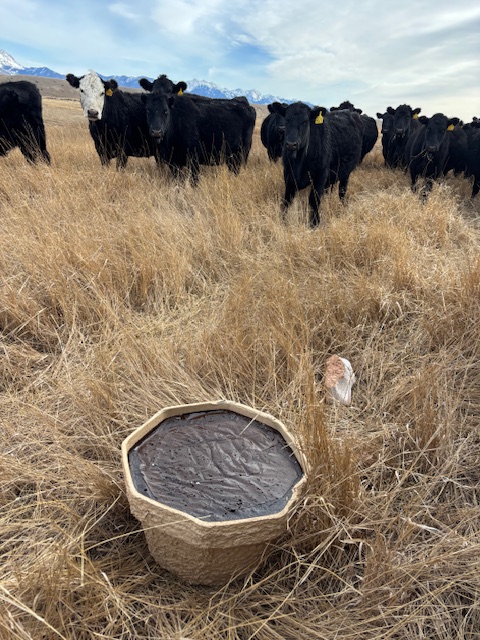
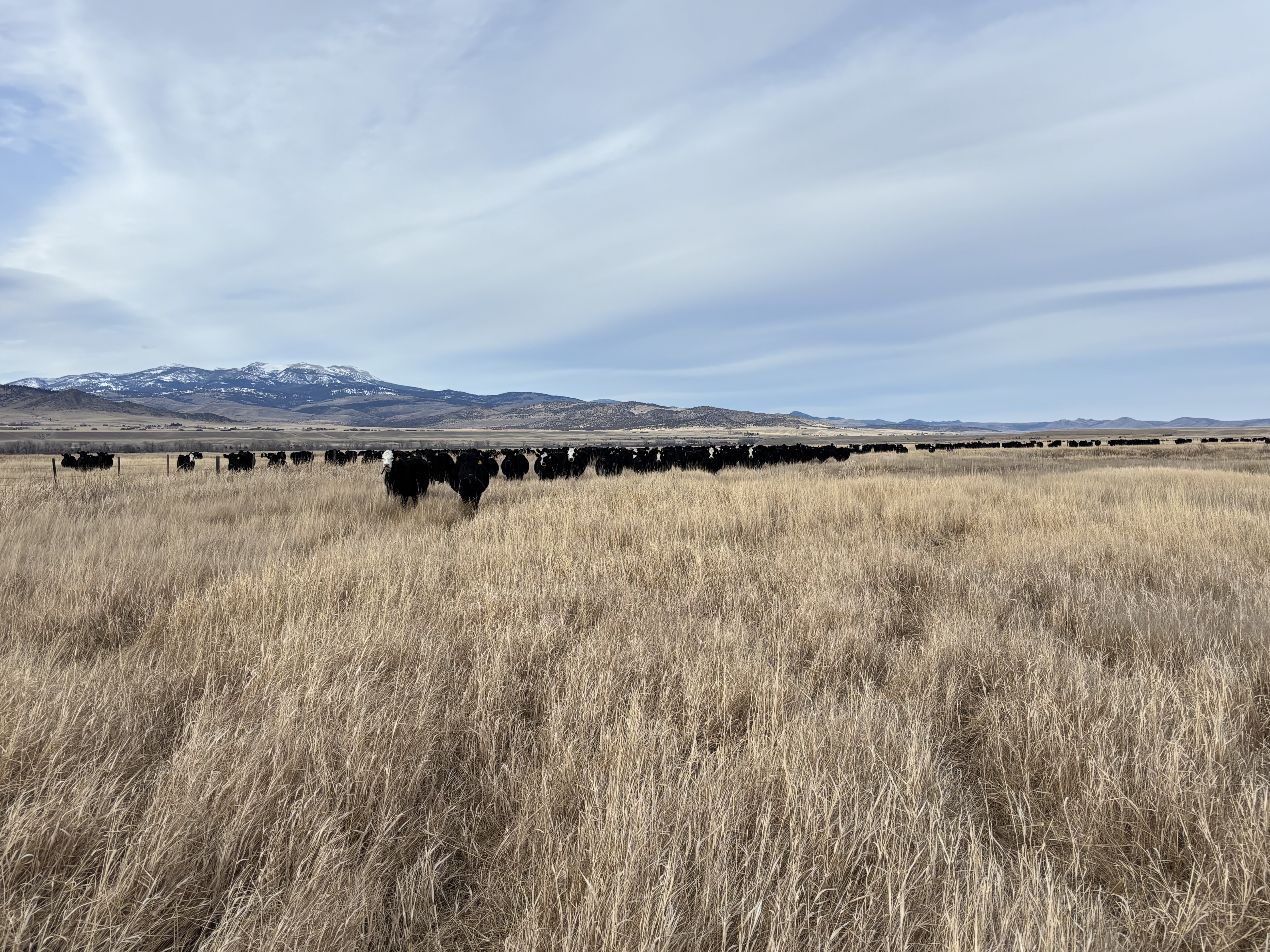
As for us personally, the drought has impacted our leased land. Irrigation options were decreased. Here it is the beginning of February and we don’t have snow. With only one dusting all winter so far, we are praying for precipitation. Even now, the drought impacted us and we sold our personal herd. It’s a good time to sell, prices are up, but it’s weird to have them gone. The ranch where we live and work is also downsizing this month to accommodate for drought. Here we are feeding our girls one last time before they got on the truck…

CHANGE

This past Christmas season we spent some time with each of our kids, which is always great. We love spending time with them. Our oldest is in her 3rd year of vet school at Kansas State, our middle one is in the process of moving to Texas, and our youngest one proposed to his girlfriend, so we’ll be gaining a daughter-in-love in August! Phew! I’m so thankful that the Lord is working in their lives and leading them to places and situations that He has for them.

QUESTIONS OR COMMENTS?

Feel free to drop me a line if you ever have questions or comments. I love connecting with you!

Share Your Story!

You never know what someone else may see in your life.

Replacement heifers are curious, just like students!

Well, it’s been more than a hot minute since I’ve posted. It isn’t because I lacked the words or the desire, but I lacked the heart. Why are my words needed? What can I say that hasn’t already been said? In a world with so much to read, what can I offer that is different from everyone else? Plus, life is full, isn’t it? Everyone’s life is busy.

The rancher’s life is busy, even when it’s not. What do I mean by that? We are on call, all the time. If a car drives through our fence, we need to go put the fence back up. (Yes, the driver was okay.) If a fishermen leaves a gate open, we go put the cows back. If…you get the idea. Many of you are living it, too.

There’s never a shortage of things to do in agriculture. This isn’t said as a complaint, just a statement. It means that it’s easy to let things like blogging go because you’re living life.

But something profound happened yesterday that has me seeing life a bit differently. I went to a meeting on a college campus where my husband was speaking to a group of ranching students. I went because I knew a couple kids and my husband was speaking–I did not intend to come back changed.

Yet these kids asked engaging questions. I got to speak to some of them. And you know what? So many of them are in our boots: starting out as first generation ranchers.

In other professions, if you’re the first in your family to become a doctor or a lawyer, you’re efforts are celebrated. In agriculture, people are more likely to ask, “Why would you want to do that?” Yet, I’ll tell you what: the room was packed with smart, tenacious, hard-working students ready to start down the trail. Even though none of them were my actual kids, I felt the pride of a mother. My momma’s heart celebrates them and their desires.

Over 25 years ago, we started out as first generation ranchers. We expected to be land owners with a huge ranch by now. Ha! While that hasn’t happened yet, our path and our story applied to so many of them. We shared a lot of what to do and what not to do. Here are some highlights:

  • Be professional. Show up clean and speak clearly. Just because it’s agriculture doesn’t mean you show up with manure on your boots.
  • Value all people–even if you don’t agree with them. Their viewpoints expand your perceptions.
  • Take every opportunity you can. Volunteer to help at events. Join groups. Rub elbows with guest speakers and ask a lot of questions.
  • Do small tasks with excellence. If your mucking out a barn, do it well.
  • Follow passion, but add education. Work for others and learn.
  • Take care of your possessions. You may have the oldest truck in the world, but you can keep it clean.
  • Be proud to be first generation.

The reality is, agriculture takes grit and brains. You won’t make it long in agriculture if you can’t make sure your output is greater than your input. This requires annual planning and spreadsheets galore, while having boots on the ground. It means weathering storms and unpredictable events.

Sometimes, that’s easier said than done, but building a community helps. We need each other. Seeing these kids’ hearts and hopes and a room full of kids wanting to get into the industry shifted my perspective. Maybe my life story is messy, but it just may help someone else.

I don’t know where your life has brought you, but I encourage you to share your story. You may not think it’s much, but there’s a generation that needs to hear it.