Where’s the Beef?

More cattle pics 010
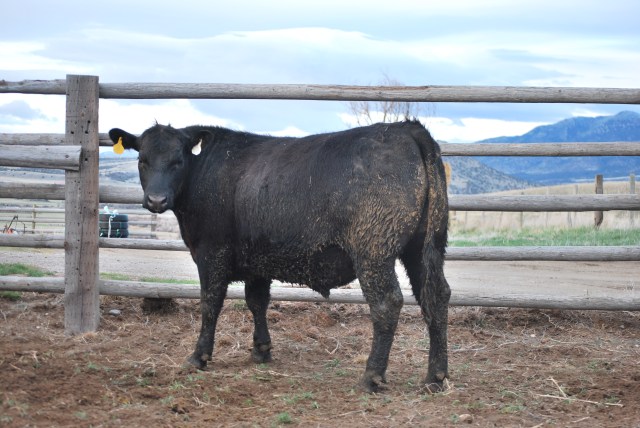
Ready for harvest–just muddy from the rain storm.

It’s official–we have a new Facebook page promoting our locally grown beef. A website will soon follow.

We’ve been in the beef business for decades. As a small scale producer, we have close contact with our cattle. There are a lot of good producers out there who take great care of their herds. We aim for the same.

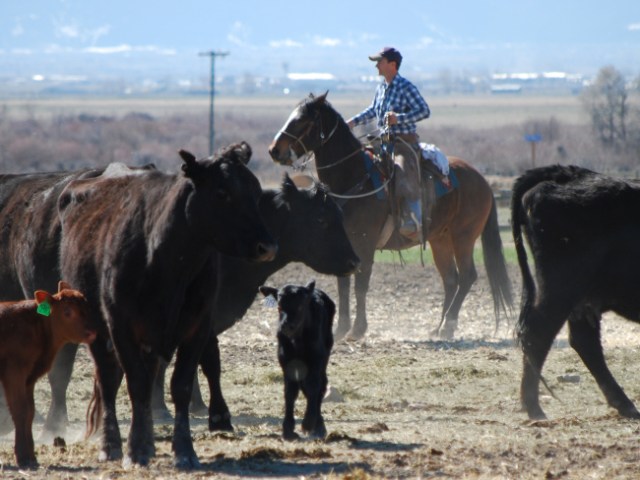
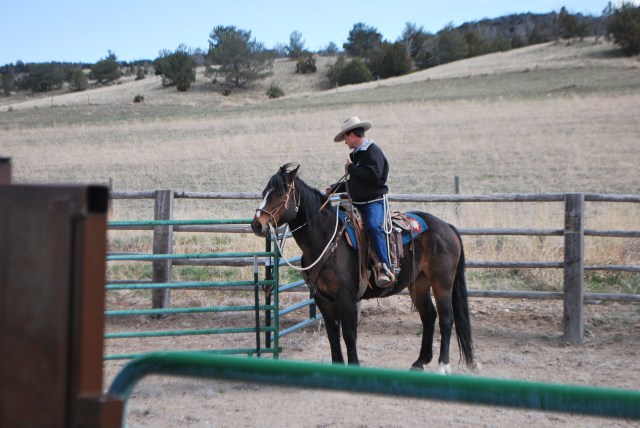
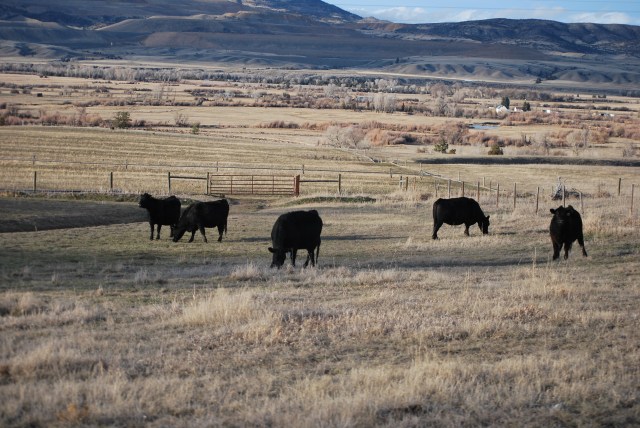
Our cattle are handled with low-stress techniques. What does this mean? It means that we use natural methods for pasture rotation and slow movements. We try not to raise our voices. Studies show cortisol levels in cattle increase with raised voices alone. Can you imagine what whips and a high lope do?

Yes, some people do still use these methods. Early on in our history, we tried a lot of methods–many which told us what NOT to do. We’ve learned from and by our mistakes. It is much like being a parent: there times I wish I would’ve responded differently to my kids. Sometimes we change our tune and say we are sorry because even though we are the adults, we don’t always get it right. We try to do it right–certainly! The same is true with ranching. We’d love to think that we have arrived at a perfect homeostasis because that would mean everything is perfect. However, we are constantly learning and studying so that we make choices that are best for the cattle and for us. We want the best long term effects, not what gets them to the pasture the fastest. We want to capitalize on strengths.

Each of our children exhibit different strengths. Ranches are similar. Granted, we don’t look at our cattle and think: “Wow, that one is artistic, that one is an engineer…” However, we can look at a particular piece of land, note the strengths, and determine, “This is great summer pasture. Or this is a great space for a hay field.”

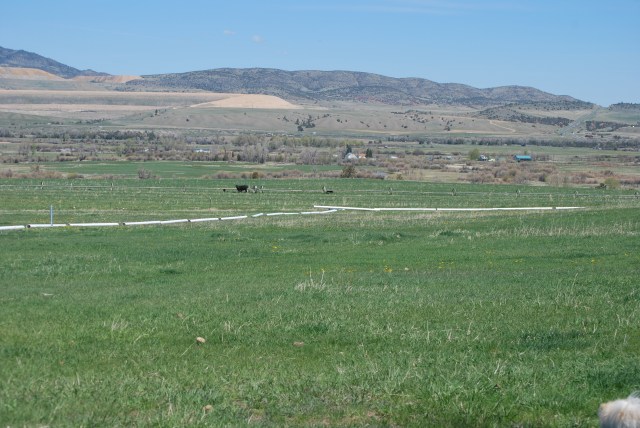
With our place, we have a great set-up to raise beef naturally. We’ve got nice forage, river pasture, and an irrigated cover crop for later in the season. We are able to rotate pastures as needed. Most of all, we love what we do and we believe in quality food.

Check out the link to our page:

Click Here

How about you? What is the best use of your land?

PASSION

What qualifies us to ranch?

Perhaps I should answer with fact: My husband has degrees in animal science and agricultural business, as well as a Masters degree. He has twenty two years of experience in various states. Together, not one moment of our married life has separated us from agriculture. We’ve made money in cattle sales. We constantly read: new studies, stats, economic projections…

A plaintiff could argue: You grew up in town. Your family name isn’t present in generational agricultural heritage. No one gave you land or cattle. Start-up funds are minimal in comparison. You’ve lost money in cattle sales.

Both perspectives are true.

“A musician must make music, an artist must paint, a poet must write, if he is to be ultimately at peace with himself. What a man can be, he must be.”Abraham Maslow

What fuels a musician, an artist, or a poet fuels us.

Passion.

Many think we’re crazy. Hard work, fencing, manure, gain/loss, time, money, effort…it all adds up. Last year was our hardest year ranching. We’d done well in years prior, but last August we sold short-term pairs the day the stock market crashed. At that point, we berated ourselves for our stupidity, questioned our sanity, and at the very best, doubted our hopes. We considered selling everything and never buying another cow or horse. Our pendulum swung in opposition to our desire.

It took time before we saw the light again. As we imagined life without cows, urban sunrises, and our children growing up without any ranching, the thought crushed us more than the blow of loss

We didn’t feel like continuing. We lost steam. Yet passion kept us from quitting.

Feeding, first calves 2016 026

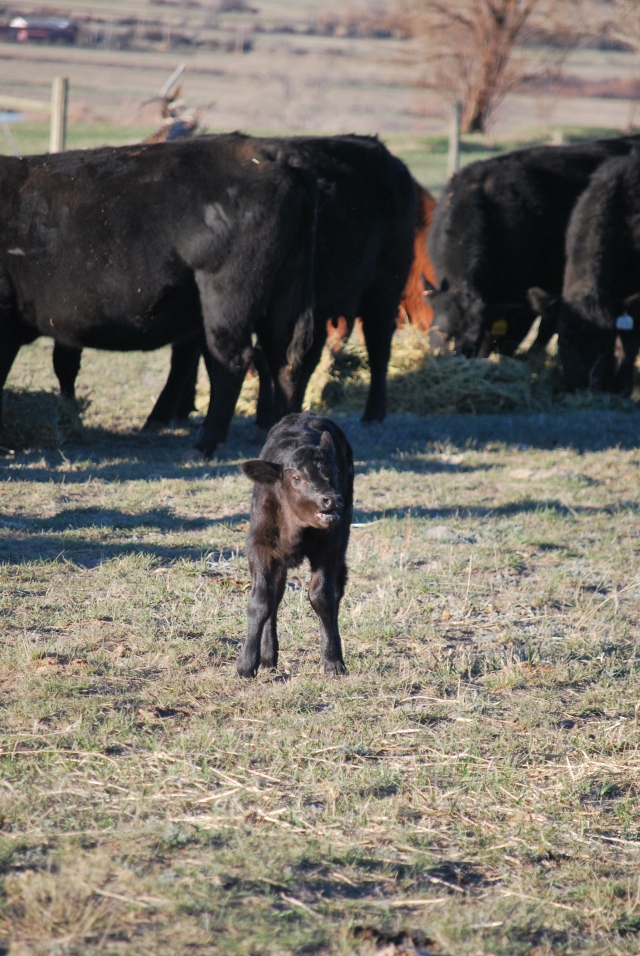
The first baby this year.


Right now, our small little herd is calving. (To read why we chose spring calving, click here.) Spring brings the gift of life. In the morning, we head to the window to watch the calves bopping through the field. Do we get irritated? Yes. Do we grump? Sometimes. However, we desire to grow in thankfulness and keep fueling our passion.

How do you fuel passion?

Sometimes you don’t have to, it just naturally flows and there’s nothing you can do to stop it. Lately though, in my personal goals, I’ve let a voice slip in: You’re never going to make it. Others will do it better than you. What are you thinking?

 It’s very difficult to press on listening to the ugliness of doubt. Doubt steals my energy, my hopes, and my dreams.

Thus I’m convinced: to fuel passion, I must ignore doubt. In addition, I must give myself permission.

I know that sounds basic. Give myself permission. How many of us, though, feel like we need permission just to live? How many people long to know their intrinsic worth outside of performance? This is a bigger topic than today’s blog, but allowing myself to have permission to breathe, to live, to love, to dance, to dream, and the freedom to pursue what I enjoy… Well, it’s added a few logs to the fire of my passion.

Here in our cyber connection, I am unaware of the challenges each of you face. Just know something: You are worth it. Your passions are needed in the world, just as ours are needed in the pasture.


I’d love to hear your comments on how you keep passion alive. Or your current challenges.


Entrepeneurs

Out to Summer Pasture
Photo by Janice Cartwright

Yesterday I was able to attend a class about Growing Food Businesses sponsored by AERO. The day circulated around produce and Farmer’s Market opportunities. I’ve not been one to delve into Farmer’s Markets yet, but with our homegrown beef it is something we wanted to know more about. Additional information is almost always helpful for obvious reasons, but it also triggers new thoughts.

There’s something about being in certain groups of people that get your wheels turning. I didn’t know any of these folks and I won’t be seeing them regularly, but the energy present from a group of entrepreneurs certainly was fun. Being with others who want to create something new or use things they have to produce a product that will benefit others reminds me of the fact that we too are entrepreneurs.

I realize that as beef producers we aren’t classically seen as entrepreneurs, but really we are. The definition of entrepreneur is “someone who initiates or finances new commercial enterprises.” (Encarta Dictionary) Some don’t think of ranching as a commercial enterprise, but cattle are bought and sold as a business, so it classifies. Thinking about things in this way makes me want to mull over new ideas, see new perspectives, and dialogue about what’s been working and what hasn’t.

Since we are small scale, the idea we currently have implemented is selling beef directly to consumers. While this isn’t a new idea, what we finish them on isn’t average feed. Our beef are finished on natural forage. Last year they grazed on a cover crop of radishes, turnips, triticale, and sunflowers. When we do grain the steers, we give oats and barley. The cattle that grazed on the cover crop alone (without grain supplementation) gained an average of three pounds a day.

We love seeing things from different angles. It seems imperative to make it in our day and age. What about you? How would a new perspective shift your day? What new ideas can you implement?

Let’s not be afraid to try new things!

Our Business Brochure

Last week I talked about a business plan in ranching, so this week I’m sharing our business brochure with you.

Your place is unique, so decide upon a model or plan that works for you. We need a brochure style. Maybe you want a one-page outline or a spreadsheet. Since we are sharing this with customers, we wanted a formal approach combined with our story.

We can’t put everything on a brochure, but I’m a strong believer in connecting our story with your story. Maybe you’re a fellow producer, perhaps you’re a customer, or you could have stumbled upon this website. Whatever “you’re” you are, we value your journey and how it connects with us. A solitary story line is a very boring place to be and we treasure how our story has, or will, weave along with yours.

The Plan

ImageWhat did you want to be when you were growing up? Are you doing it?
After the phases of wanting to be Tinker Bell, Batman, and such, did you have an idea of what you really liked? I dreamed of being an author. Oh to write books like Judy Blume! Today, words impact me more than any other art form. For my hubby, it was ranching. He’s wanted to be a cowboy since he was old enough to “saddle” the arm of the couch.

He shared his passion of agriculture and I found it naturally alluring. As we’ve done this ranching adventure, we’ve had to adjust and think about what we want the future to look like. When we first began years ago, we started out with a few cows here and there. Our setup was less-than-ideal, but we made it work. In 2013, we sold the 125 cow herd we’d grown (still not huge in many ranching circles, but it was profitable and enjoyable), as well as our house. We let go of leases. We didn’t have land of our own, so this move was to lead us to a place of our own where we’d rebuild the herd.

It took two years before we found our land and it didn’t end up being where we thought. Now we have 135 acres–a fair chunk of land–but you ranchers know this isn’t enough land to accomplish ranching full scale. We had nearly 4,000 acres in lease land before–this seems minute. However, it isn’t impossible. We just need to change our business plan. Obviously we can’t run a cow/calf operation that will pencil with so few AUM’s.

What we can do, is support a small herd of beef cows where we supply local restaurants with high pasture raised veal. This is a different picture than we ever anticipated, but as I’ve dealt with health issues and our family with food allergies and sensitivities, we are increasingly excited about quality food. We have a mission statement and business plan that clarify and outline our goals.

Do you know where you want to be in ten years? How will you get there? What will be different? What will be the same?

Here’s what we did: First, come up with a vision statement and/or mission statement that describes what you do and WHY you want to do it. Simon Sinek has an excellent talk about the motivation behind what you do. Your WHY is always more important than your WHAT.

Next, outline your business. That’s right, ranching is a business. Obviously we sell cattle. Go deeper. Do you want to start keeping replacement heifers? Raising bulls? Is your target wean date in October for November shipping? Even if you’ve done this for years, look at if there is something you don’t want to do or something you’d like to add to your operation. Get it on paper. This brings solidarity to your ideas and uniformity to your thoughts. Thoughts will often swim around in our brains for decades unless we give them some form of action.

Finally, make a plan for what you’d like to accomplish this year. Even though it is March, there is time to evaluate. As I’ve mentioned before, use what resources you already have and then look at moving forward. It might not happen exactly as you plan, but you will move closer toward that place of where you want to be in ten years

Nearly Calving…

cardwell ski day, cattle pics 074
Some of the new girls.

It’s almost that time for us–calving season! I know its cliché, but calving season and spring are true reminders of the cycle of life. The snow will stop (although sometimes in Montana we wonder). Trees will become green. Everything that slowed for the harsh temperatures and weather patterns of winter will indeed come to life again in the spring.

As I’ve mentioned before, we downsized when we moved, selling our herd. We’ve had short-term cattle and steers and now we are building back a small herd. We picked up a few “late” calvers from some friends. They begin calving in January, but we prefer to aim for the first of April. Their lates were our on-times.

Most every rancher has their calving preference. Some like after the first of the year because it allows for older calves in the fall, it doesn’t interfere with spring farming, and rebreeding happens before you turn them out to pasture in the summer.

We like April calving because the temperatures are milder and we don’t have indoor facilities. We have very minimal farming on our place and historically our calves gain well by November. This timing works for us, but each producer must do what works best to fit their needs. Where a small group didn’t fit the winter calving bunch on one place, they were a perfect addition to our pasture.

Wouldn’t it be handy if everything in life worked that way? There are avenues were it does: that’s why craigslist and garage sales are successful.

Don’t you ever wonder sometimes though–what does work best? Certainly trial and error are great teachers. If you happen to have heritage on a place, perhaps time has shown you what works best. However, conditions (people included) change over time. It isn’t ever a bad idea to create a business plan for ranching. (More on business plans in ranching next week.) Having a vision of where you are going will help you take steps in the right direction.

We began ranching from scratch and we are thankful for the piece of land we have now. Is it feasible to stock it with a lot of cattle? Absolutely not. It’s going to need a few years of TLC before it reaches maximum production. It is in our best interests to have a small scale operation focused on instilling quality grazing for meat production. Our goal this fall isn’t to sell to a feedlot, but to sell high quality veal to consumers.

We believe in a symbiotic relationship between land and animals. This vision gives us an opportunity to grow and care for both land and animal alike with a family focused production. We’re quite excited about this spring…

Let the calving commence!


How About Those ZZZ’s?

Boy, Male, Man, Young, Sleeping

Maybe it is night calving, or worry, or working two jobs…whatever the source, lack of sleep messes with people. I’ve misplaced my keys after just having them in my hand and forgotten what someone told me… in addition to yawning my way through the day. At some point, it seems sleeplessness affects everyone.

In keeping with the unwritten laws of cowboy culture, plans do not change because of exhaustion. After repeated cups of coffee or several pinches of chew, the cowboy keeps going as if nothing had ever happened. Life doesn’t stop because we are tired, I understand. It’s just that after decades of pushing through, it can catch up with a person.

There are a couple of old wives tales or pioneer remedies for lack of sleep, like drink a glass of warm milk before bed. (This has actually been proven to have some merit because of the soothing effect of a warm drink as well as a tidbit of tryptophan in milk.) My grandpa used to put a big rock in the oven, then put the warm rock in his bed before climbing under the sheets at night. Early settlers used to pick hops, dry it out, and put it in their pillows. Hops are still recommended as a natural remedy for sleeplessness. (This doesn’t include passing out from drinking your hops.)

If you google insomnia, there are more websites than I can count with suggestions for sleeping. There are many helpful tips. Yet hearing people in agriculture talk about difficulty sleeping makes me wonder: Can a lack of sleep come from adhering to past cowboy culture in our modern world? In other words, how much pressure is there to work sun up to sun down because that’s what ranchers “do”? Does an unwritten mentality–I must do x y and z today in this particular way because otherwise the neighbors might think I’m lazy or incapable–keep us from a peaceful night of sleep?

Ranching is hard work no matter what. It is rarely a lack of exercise that keeps a cowboy or cowgirl awake at night. Many days our bones melt into our beds. What I’m wondering is if old mindsets effect new circumstances. I think they do.

There are worthy traits passed along in ranching: good work ethics, caretaking, respect, joy, nurturing, tenacity, etc. May we always hold on to these! However, if we are doing something simply because that’s the way it has always been done (even if there is a simpler method available), maybe we can save ourselves some hassle and catch a few more zzz’s. In our place that we bought last year, we are modifying the irrigation system because what’s always been done here is wasting water and causing soil erosion. Upfront, it would be easier to just leave what’s here, but in the long-run, we’ll have some mighty dry and unproductive pastures. We are looking to enhance productivity for the future–not just for us, but for those who come after us.

I’m also reevaluating my daily process because doing what I think looks good to others or continuing in something because that’s what’s always been done has cost me some sleep. I certainly don’t want to do the opposite and tick everyone off just because I can, but I think remaining true to how God made me, even if it doesn’t fit the mold, is of high priority. I may not get it right all the time, but I suppose that’s why there is grace.

May we find grace for one another, our mindsets, and our ranch–and may this lead to some restful nights.

Living or Dying?

April 2015, Cardwell Hike, Billy cattle class 054


“Some people are so afraid to die that they never begin to live.”

                                                      –Henry Van Dyke


America is home of the free, but it is also home of the stressed-out, fast-paced, daily-grind type of living. Not everyone, mind you, operates at break-neck speed, but it is certainly a temptation in our culture. Whether our personalities thrive with on-the-go living or not, it is important to consider what promotes our living style.


It seems like no matter where I go, people offer me their stories. I love this because I enjoy connecting with others and hearing about their lives. Often in the middle of another’s journey, we find some resemblance to our own. Lately I’ve noticed and been introduced to many people who have worked decades in jobs they detest. They do it because they need to provide for their families, or it provides a better income than what they really wanted to do, or because they felt like someone else needs them to do it.


Do we do this in ranching?


I’d like to think not, but I’m leaning towards assuming that we all do it sometimes. Certainly there are times in our lives when we have to do things we don’t like or wish not to do. Early on especially, there are hoops to jump through or classes to take. (Have you ever said, “I don’t see how this will ever apply to me?”) However, those menial jobs, the classes, the hoops–they all help lead us somewhere…


Where is that somewhere though?


Are the things we are going through leading us to a place of discovering more of who we are? Are they uncovering our talents or weaknesses? Most importantly–are they promoting passion?


It is a lot easier to keep up the pace, when we are motivated by desire or passion and enjoy what we are doing. This isn’t an excuse to go out and quit your job, but an invitation to see how you can bring joy or desire into your position. Maybe it will include changing careers, but first know who you are and what you were meant to do and pray for the right time.


As for us in ranching, it means we have a mission statement and a vision of what we’d like to see happen. This includes our desire for a symbiotic relationship between land and animals. It encompasses good stewardship. It definitely includes failure.


Whatever we are willing to get back up from time and again is a good indicator of desire.


We’ve tried things that didn’t work, downsized at the right times and the wrong, and made a lot of money or just a little bit. It is always after things don’t go that well though that we reassess. This isn’t punishment, it is a gift. Reassessment leads to defining moments and a stronger operation. How many times after a failure though is it hard to take a risk? It’s the most difficult time to risk, yet probably the most important. Sometimes we are so afraid of dying in our ag production, that we never really come alive in the caretaking of it. That’s why the quote above hits me so hard. If I’m afraid to die, then I’m never really free to live.


Of course there is balance necessary in all arenas in life, but there is also a strong need in our communities and country to live out our giftings and talents. What do you think? Are you really living? May we all be in the place, or come to the place, where life blossoms out of us. LET’S LIVE!!


What Do You Have Right Now?

february--2016--calendar

February 2016. Are you where you want to be? Thinking back five years, are you on the path you thought you’d be on at this point in your life?

Yeah, me either. Although I must admit my life goals have been somewhat ambiguous. “Do more writing. Be a better ranch wife. Choose joy above all.” These aren’t bad things, but they are hardly quantifiable. Have I reached them? I don’t know, how much is more? What is better?

What if I’d said, I’d like to be writing four pages a day. Or I’m going to study the cattle market weekly. If I have a target, I’ll know whether my aim is on.

I realize it is February and usually it is January that beckons for resolutions and goals, but the year is still young. In previous years, January’s been full and February starts to feel like the New Year. January’s been a time of dreaming and casual thinking, while February brings details. What do you want for the upcoming year?

My goal is to be writing a couple pages a day and studying market trends. I’m tackling health issues and looking forward to resolution.

When we first started out and had nothing, we operated day by day, reassessing what we had to use it to further what we wanted. We are in the same boat again. Due to relocating, we are starting over again. We chose to do this because letting go of a smaller dream allowed us to pursue a bigger one. Now we are evaluating our assets. What do we have? How will it help us grow? What other tools do we need to achieve a larger herd?

The obvious is money. No one would turn away more money. Yet this isn’t the heart behind our life. So what can we do now with what we have?

We have desire…vision…a tractor…land…new fences…Grass…Water Rights…Kids that want to help…We have knowledge.

We need to reseed pastures…to plant new cover crops…to bring in goats for weeds on the river…

These things are all doable. Yes, we’ll need to buy a few things, but we have the ability to complete the work ahead of us.


What do you have already that can help you get to where you want to go?


Puppies!


puppies! 004

How cute is that face?

It’s pretty adorable. It doesn’t scream full-blooded Border collie though. We raise Border collie pups, usually. Only this time our momma dog became pregnant on her own. We hoped it was the closest neighbor’s Border collie that fathered them, but when they were born, they were awfully dark.

Mostly black.

Some Border collies have less coloring, we rationalized.

Don’t you love when you try to talk yourself into the answer you want instead of the answer you have?

Maybe they’ll look different as they get bigger, we quipped.

Yet they look like this at almost six weeks…

puppies! 007
Cuties! 1 red/chocolate color…4 blacks


Is that a little black lab I see? Our nearest neighbors confirmed they’d seen a black lab in the area–we just hadn’t seen him.

It’s a risk you run when you have an unfixed female. Yet it isn’t hoped for much. We really don’t have many neighbors–and by neighbors I mean people within a mile or more of us–no city neighborhood blocks. We didn’t anticipate it much because there isn’t that much traffic around here.

Yet things happen. These five oopses happens to be very mild tempered and sweet as candy. Some surprises are tolerated easier than others. Now I just have to find five lovely people who’d give these cuties good homes…